How Laser Hair Removal Works for Different Skin and Hair Types
6 December 2025
Choosing the right laser hair removal treatment starts with understanding how the technology works and how it performs across different skin and hair types.
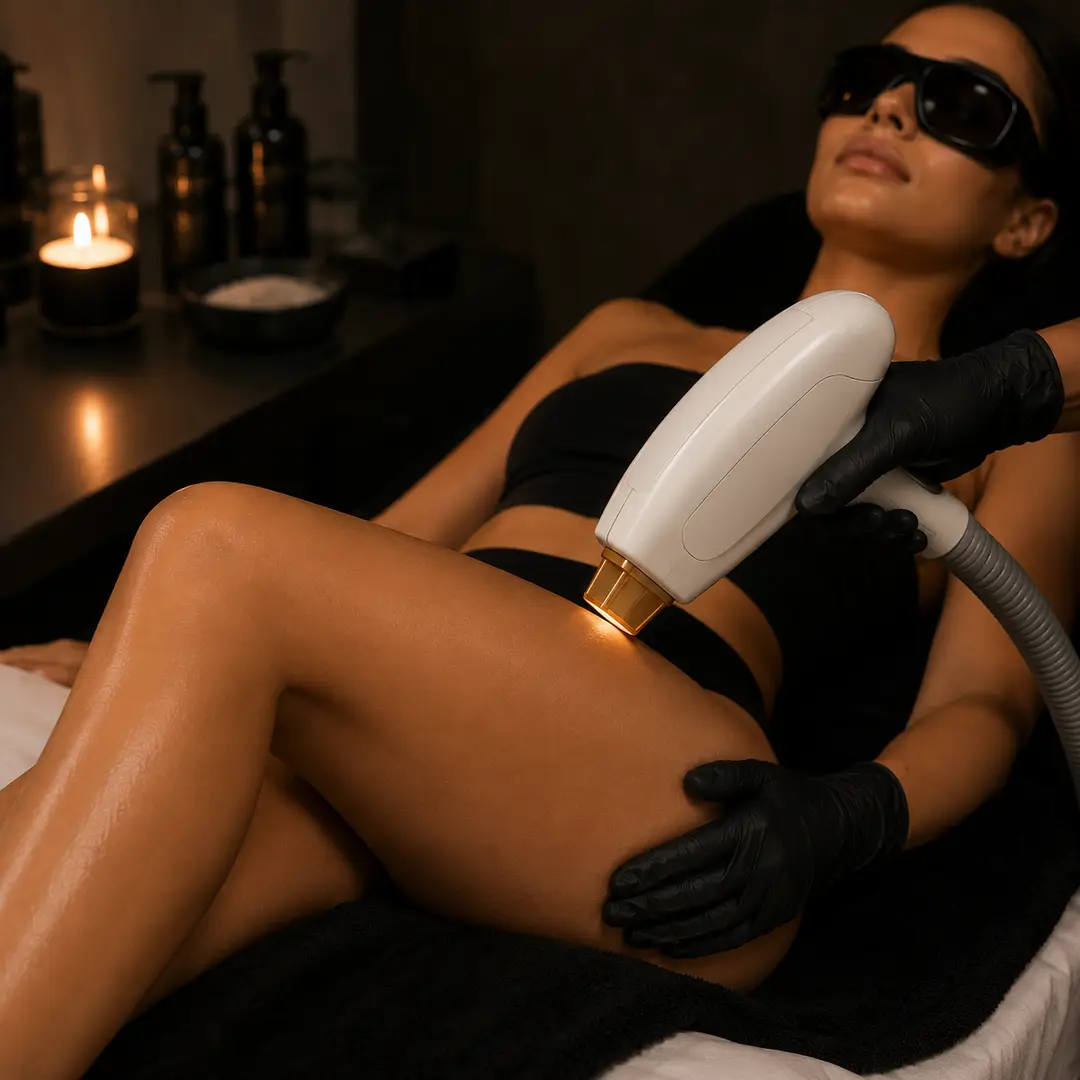
Laser hair removal uses laser energy to target melanin within the hair shaft through a process called selective photothermolysis. By heating the hair, this process disrupts the growth ability of the follicle, resulting in fewer hairs over a course of sessions.
Results depend heavily on the contrast between skin tone and hair colour. People with lighter skin and darker hair typically respond well, but a range of laser wavelengths now makes treatment suitable across a broader range of complexions.
Key takeaways
- Different skin and hair combinations call for specific lasers to remove hair effectively.
- Choosing the appropriate laser helps balance effectiveness with what suits your skin and hair type.
- A professional consultation is essential to tailor treatment to your individual needs.
Understanding the treatment
Laser hair removal uses concentrated light to target the melanin in hair follicles. The treatment is tailored to each skin and hair type, and because hair grows in cycles, a series of sessions is needed to catch hair during its active growth stage.
How the procedure works
Your treatment plan is created during a consultation. The laser device emits a concentrated beam of light that is selectively absorbed by the melanin in the hair follicle, while the surrounding tissue is largely left alone.
Laser technology
We use Cynosure Elite iQ technology for laser hair removal and to help address vascular concerns and pigmentation alongside skin rejuvenation. This advanced system is designed to deliver precise, customisable treatments that suit a range of skin types and hair colours.
Additional skin benefits
Beyond reducing hair, laser treatment may also support skin rejuvenation — helping improve skin texture and address minor signs of ageing, discolouration, vascular concerns and sun damage.
Skin and hair type considerations
Your hair type and skin type play a major role in how well laser hair removal works. Practitioners use the Fitzpatrick scale to classify skin types and adjust laser settings accordingly, so the treatment can be applied effectively across darker and lighter skin tones.
Sensations and side effects
You may feel some discomfort during the session. Typical side effects can include skin irritation, redness and swelling, which are usually temporary.
Before and after care
- Before treatment: avoid sun exposure and tanning (including fake and gradual tanning). Sunscreen is essential.
- After treatment: stay out of the sun, avoid scrubs and chemical or mechanical exfoliants for the next five days, avoid hot showers, steam rooms and saunas, and pause exercise for 48 hours.
Customising the treatment for men and women
A range of laser hair removal options is available for men and women, each tailored to the individual characteristics and density of hair growth on the face, back, arms, legs and body.
Long-lasting hair reduction
After a course of sessions (commonly 6–12), most people see significant hair reduction. While the result is long-lasting, some hair may eventually regrow, often finer and sparser than before.
Laser hair removal vs traditional methods
Laser hair removal offers longer-lasting results than traditional methods such as shaving, waxing and plucking. Electrolysis, by comparison, tends to be far more time-consuming and can be more uncomfortable.
Regulation and clinic standards
In Australia, laser hair removal should be performed by a qualified practitioner. Clinics must comply with the relevant regulations, and protective goggles should always be worn during a session.
Skin tone changes
Laser hair removal is not designed to lighten the skin, but a change in pigmentation can occasionally occur as a side effect. Because the laser targets melanin — the pigment in both hair and skin — energy affecting the surrounding skin can disrupt normal pigment production, leading to:
- Hypopigmentation: a lightening of the skin in the treated area.
- Hyperpigmentation: a darkening of the skin, often following inflammation after treatment.
For most clients these changes are temporary. The risk underlines the importance of choosing a qualified practitioner who uses settings appropriate for your skin type.
Minimising risks
You can reduce the chance of side effects with a few key steps:
- Choose a qualified practitioner: our team is trained and experienced in laser treatments.
- Have a patch test: this checks how your skin reacts before a full session.
- Follow pre- and post-care instructions: careful aftercare supports your results and helps avoid complications.
Risks of laser treatment
While uncommon, risks such as hyperpigmentation, scarring and even burns can occur. It’s important to disclose your medical history, medications, recent sun exposure and any tattoos during your consultation.
Technology advancements
Modern advances in laser technology have improved the effectiveness of hair removal treatments, providing high contrast between hair and skin and making treatment suitable across a broader range of complexions.
Patient experience during treatments
Expect a swift procedure, with each laser pulse lasting a fraction of a second. Your experience is shaped by the skill of the practitioner and the comfort and convenience the treatment offers.
Cost considerations
Understanding the cost of laser hair removal helps you make an informed decision that aligns with your goals for long-lasting hair reduction. Payment options can be arranged, with several methods available at the clinic.
Comparing costs
Laser hair removal typically involves multiple sessions, so comparing costs can be complex. Prices vary between clinics depending on the technology used and the area treated. Waxing and shaving cost less per visit, but over time the repeated expense can add up compared with a course of laser treatment.
Choosing a clinic
Base your choice on the practitioner’s expertise, the suitability of the laser technology for your skin and hair type, and the clinic’s reputation. Book a consultation to discuss a treatment plan and the aftercare advice you’ll be given.