Hair Cycle Alignment: The Scheduling Science Behind Why Your Laser Sessions Are Spaced the Way They Are
25 June 2026
If you have ever been told you need six to eight laser hair removal sessions spaced four to six weeks apart and simply accepted that as the standard, you are not alone. Most people do. But that number is not a marketing decision or an arbitrary industry convention; it is biology. Specifically, it is the biology of your hair growth cycle, and understanding it changes how you think about every session you book.
At ELIIXA, we call this approach Hair Cycle Alignment — the deliberate practice of timing your laser sessions to the active growth phase of your individual hair cycle across each body zone we treat. It is what separates a thoughtful treatment plan from a generic package.
The three phases of hair growth — your hair is not always growing
Hair growth is not a continuous process. Every follicle on your body moves through three distinct phases in a repeating cycle, and laser hair removal is only effective during one of them.
1. Anagen — the active growth phase
This is the phase where the laser does its work.
During anagen, the hair shaft is actively forming inside the follicle, the melanin (pigment) concentration is at its highest, and the connection between the hair and the follicle base is direct and intact. When the laser energy is absorbed by that melanin and converted to heat, it travels down into the follicle and disrupts the structures responsible for regrowth. The anagen phase is the window. Outside of it, the laser is far less effective at achieving long-lasting reduction.
2. Catagen — the transition phase
Catagen is a brief transitional phase lasting roughly two to three weeks. The hair shaft detaches from the blood supply, the follicle begins to shrink, and melanin production slows. A hair in catagen is no longer anchored to the deep follicle structures that need to be targeted. Treating it achieves very little in terms of lasting reduction.
3. Telogen — the resting phase
In telogen, the old hair sits dormant before eventually shedding. A new anagen hair may already be forming beneath it. The follicle is essentially offline, with no active melanin production and no connection to the structures that drive regrowth. Laser energy applied to a telogen hair is largely wasted.
Only anagen hairs respond meaningfully to laser treatment. At any given moment, only a percentage of your hairs are in that phase, which is precisely why multiple sessions are necessary.
Why multiple sessions are biologically unavoidable
At any single point in time, the hairs in a treatment zone are distributed across all three phases. On the face, roughly 60–85 per cent of hairs may be in anagen at any given time. On the legs or back, that figure can drop to 20–30 per cent. This means that even a perfectly executed laser session will capture only a fraction of the follicles currently in their growth window.
The remaining hairs — those in catagen or telogen — are not destroyed. They continue their cycle and eventually re-enter anagen, at which point they become treatable. Spacing your sessions to catch those follicles in their next anagen window is not a commercial strategy. It is the only way the biology can work.
This is why a clinic that completes your treatment in two or three sessions is either treating you at unnecessarily high energies or is not being clear about what those sessions achieve. Long-lasting hair reduction requires repeatedly catching each cohort of follicles in anagen until the population of active follicles is sufficiently reduced.
Hair Cycle Alignment: timing sessions to the biology, not the calendar
This is where the clinical strategy becomes meaningful, and the difference between ELIIXA and a generic package clinic becomes concrete.
Every body zone has a different anagen cycle length, a different proportion of hairs in anagen at any time, and a different regrowth timeline. These are not trivial variations:
- Face / upper lip — shorter cycles, higher anagen density, typically 4 to 6 week spacing.
- Underarms — moderate cycle length, typically 6 to 8 week spacing.
- Bikini / Brazilian — variable, influenced by hormonal factors, typically 6 to 8 weeks.
- Legs — longer anagen cycles, lower concurrent density, 8 to 12 week spacing often appropriate.
- Back / chest (male) — among the longest cycles; spacing decisions require individual assessment.
Hair Cycle Alignment is the deliberate scheduling strategy that accounts for these zone-specific differences. It is the practice of building a client’s entire session timeline around their individual hair cycle patterns for each treatment zone, rather than applying a blanket four-week or six-week interval just because the package says so.
The goal of Hair Cycle Alignment is to maximise the number of follicles in anagen at each session across all treated zones. This is not just a scheduling preference; it is the mechanism by which results are optimised.
Why generic package clinics cannot offer this
A package-based approach — six sessions, spaced every four weeks, the same for everyone — is designed around operational convenience, not clinical outcomes. It creates predictable booking patterns, easy inventory management, and simple sales conversations. What it does not do is account for the individual client’s biology.
Consider what this means in practice:
- Treating legs at four-week intervals may consistently miss the anagen window in a zone where cycles are significantly longer. You complete your sessions and are disappointed with the results. The problem was never the laser; it was the timing.
- Applying identical spacing to the face and the back ignores the substantial biological difference between those zones. One may be undertreated, the other over-scheduled.
- Ignoring hormonal factors, skin type and hair texture in favour of a fixed protocol means the spacing may never be adjusted even when early session results indicate it should be.
Generic clinics can offer the protocol without understanding the principle behind it. Hair Cycle Alignment gives that principle a name and a method, and makes the distinction visible.
The ELIIXA approach: personalised session planning from the first consultation
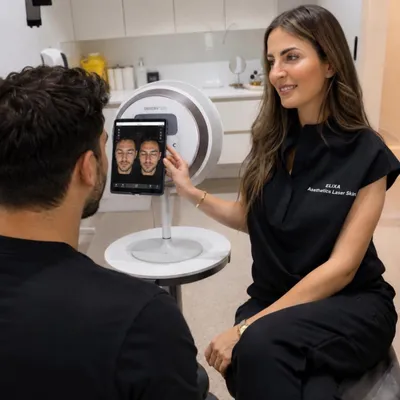
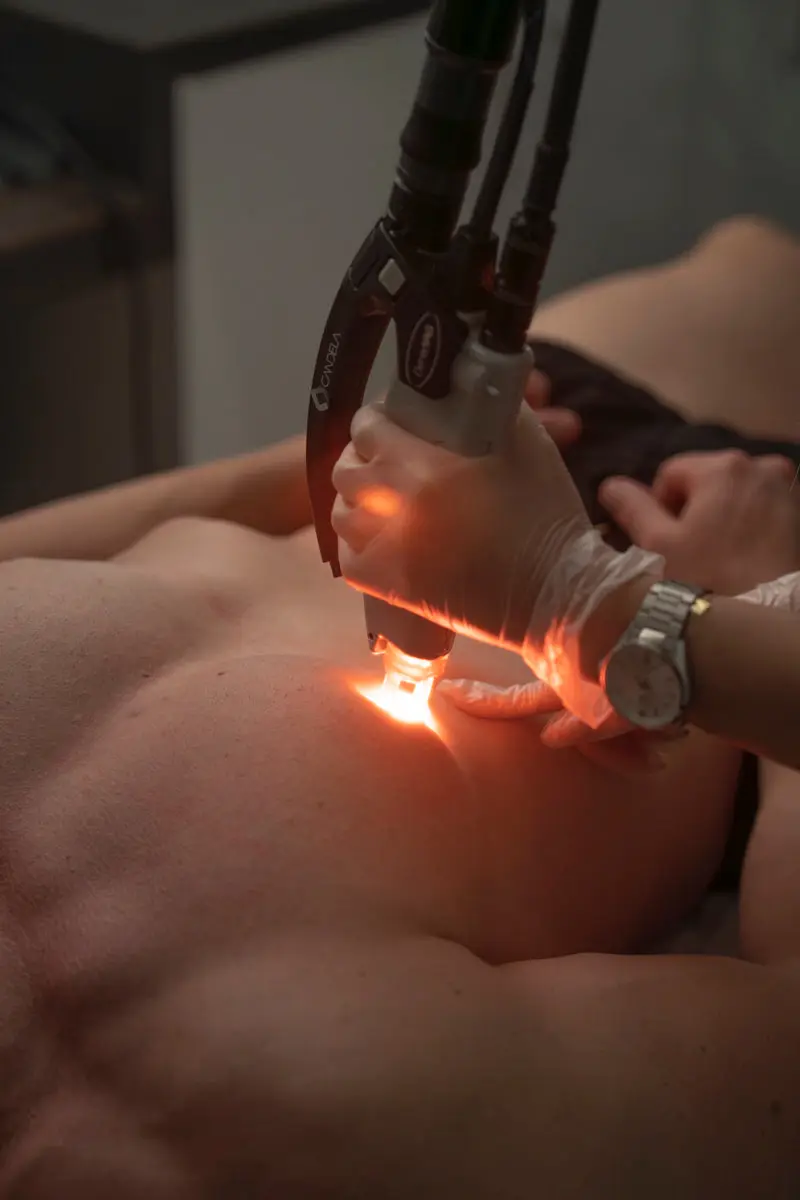
ELIIXA is a clinical skin and laser clinic in Moonee Ponds, Melbourne, with a team of nurses, doctors and dermal clinicians. Our laser hair removal treatments are performed using the Cynosure Elite iQ, a dual-wavelength platform that combines 755nm Alexandrite and 1064nm Nd:YAG, enabling effective treatment across a broad range of skin types, hair textures and tones.
The technology gives us precision. Hair Cycle Alignment gives us the timing strategy to use that precision where it counts.
At your initial consultation, we assess:
- The target body zones and their typical cycle characteristics.
- Your visible regrowth patterns and hair density in each zone.
- Skin type (Fitzpatrick scale) and how this influences recommended intervals.
- Hormonal factors that may affect cycle regularity and treatment response.
- Any previous laser history and how your follicles have responded.
From this, we build a session schedule that is specific to your biology, not borrowed from a template. As your treatment progresses, we review how each zone is responding and adjust intervals where the clinical evidence suggests a change will improve outcomes.
This is the difference between being given a package and being given a plan.
What to expect between sessions: reading your own cycle
Understanding your hair cycle also helps you make sense of what happens after each session. In the two to three weeks following treatment, you may notice hairs continuing to emerge from treated follicles. This is not regrowth in the traditional sense; it is the treated hair shaft being expelled from the follicle as it dies. This is a normal and positive sign.
You may also notice that some areas shed quickly while others lag. This reflects the zone-specific distribution of anagen hairs at the time of your treatment — areas with higher anagen density tend to show faster, more obvious clearance after each session.
What you should not do is judge the success of a session too early. The full result of each treatment typically becomes visible four to six weeks post-session, as telogen and catagen hairs that were present during your appointment eventually shed and their follicles reset.
If a clinic tells you that your results should be immediately obvious and offers a refund or additional session if they are not visible within two weeks, that is a commercial promise, not a clinical one. Hair biology simply does not operate on that timeline.
Common questions about session spacing
Can I come in sooner if I see a lot of regrowth?
The temptation to book earlier is understandable, but earlier does not mean more effective. If the follicles that were in catagen or telogen during your last session have not yet re-entered anagen, treating them earlier simply means treating them at the wrong phase again. Your clinician will guide you on the right timing based on your zone-specific cycle.
What if I miss a session or need to reschedule?
Life happens, and a few extra weeks is not a problem. Hairs that have entered anagen since your last session will simply remain active a little longer before being treated. The cycle has not been reset; it has just been extended. However, consistently long gaps can mean follicles cycle through anagen and back into telogen before you return, reducing the efficiency of your overall plan.
Why do I need more sessions in some zones than others?
Lower-density anagen zones require more sessions because each treatment captures a smaller proportion of active follicles. Hormonal zones (bikini, face) may also require additional sessions over time, as hormonally driven follicles cycle at unpredictable rates and may reactivate after initial treatment.
How many weeks between laser hair removal sessions is actually correct?
There is no single correct answer, which is precisely the point of Hair Cycle Alignment. A well-designed schedule for a client treating their face and legs simultaneously might use four- to six-week intervals for the face and eight- to ten-week intervals for the legs. Treating both zones on an identical schedule is a compromise that serves neither zone optimally.
Ready to start a treatment plan built around your biology?
If you are considering laser hair removal, or if you have had previous treatments elsewhere and felt the results were inconsistent, the answer may lie in the scheduling, not the technology.
At ELIIXA, every laser hair removal client begins with a thorough consultation that forms the basis for a Hair Cycle-aligned treatment plan. We use the Cynosure Elite iQ platform, the clinical expertise of our registered nursing and medical team, and a personalised scheduling approach to give each follicle the best possible chance of long-lasting reduction.